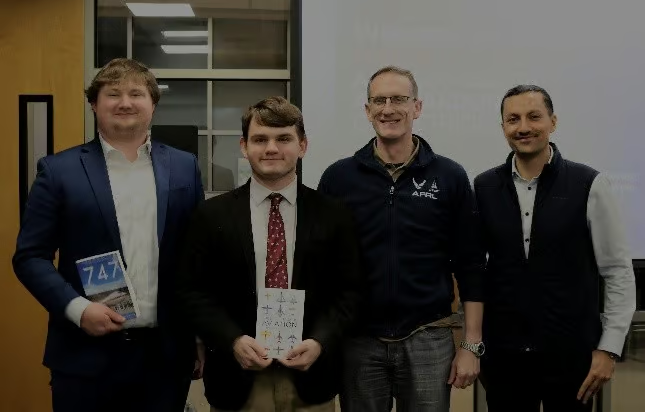
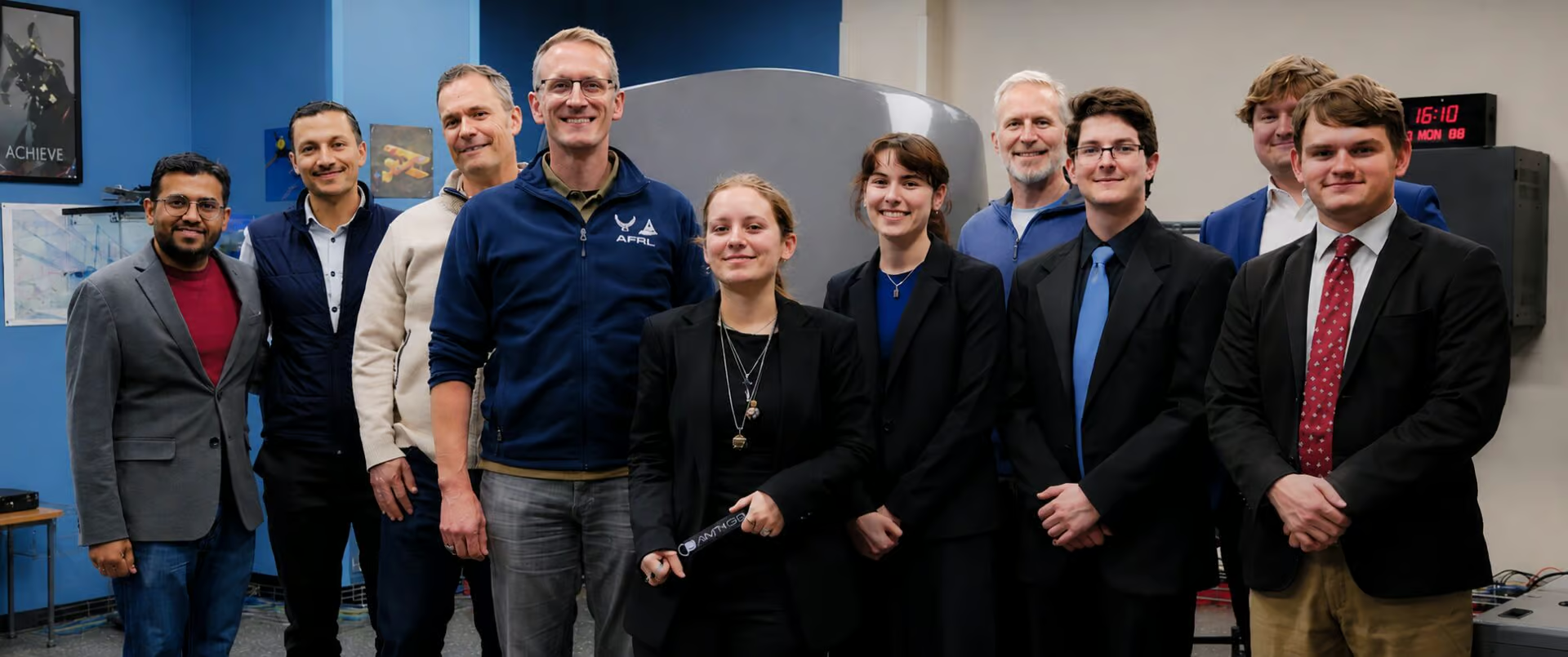
On March 28, 2026, IT FLIES USA returned to the University of Dayton, bringing together aerospace engineering students for a hands-on competition where aircraft concepts were not only showcased, but evaluated in a high-fidelity simulation environment.
Designed to bridge the gap between theory and application, the event challenged students to develop conceptual aircraft, justify their engineering decisions, and assess how those designs performed under evaluation by experienced test pilots.
From the outset, the focus was clear: this was not just about presenting designs, it was about understanding how they behave in flight.
More than a competition:
It was immediately apparent this wasn’t a typical student showcase. Students had spent the year developing their aircraft designs with guidance from their supervisors, and now the focus was on presenting that work with clarity and technical rigour. Teams reviewed final notes, discussed last minute adjustments, and prepared for the final evaluation.
Amir Khosh, Merlin Manager at Antycip, hosted the day:
“IT FLIES is not about building a perfect design. It is about putting ideas to the test, understanding how they perform, and learning from the outcome.”
He later added:
“Just before takeoff is when the project becomes real for the students. Up to that point, it has been a design exercise; once it is in the simulator, they begin to see how their decisions hold up under evaluation.”
Two concepts, two approaches
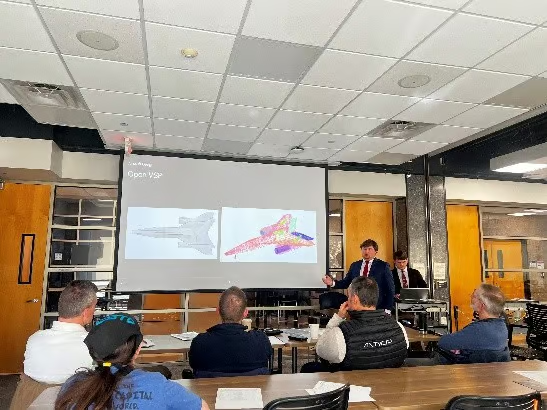
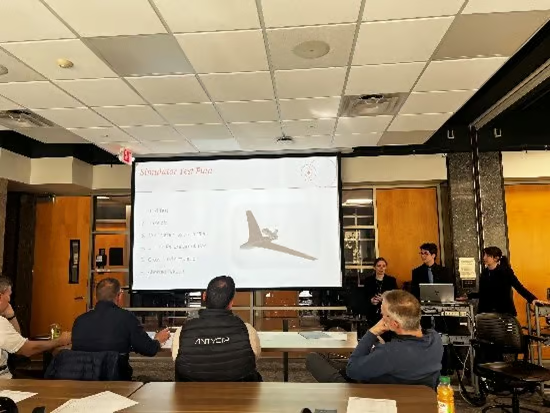
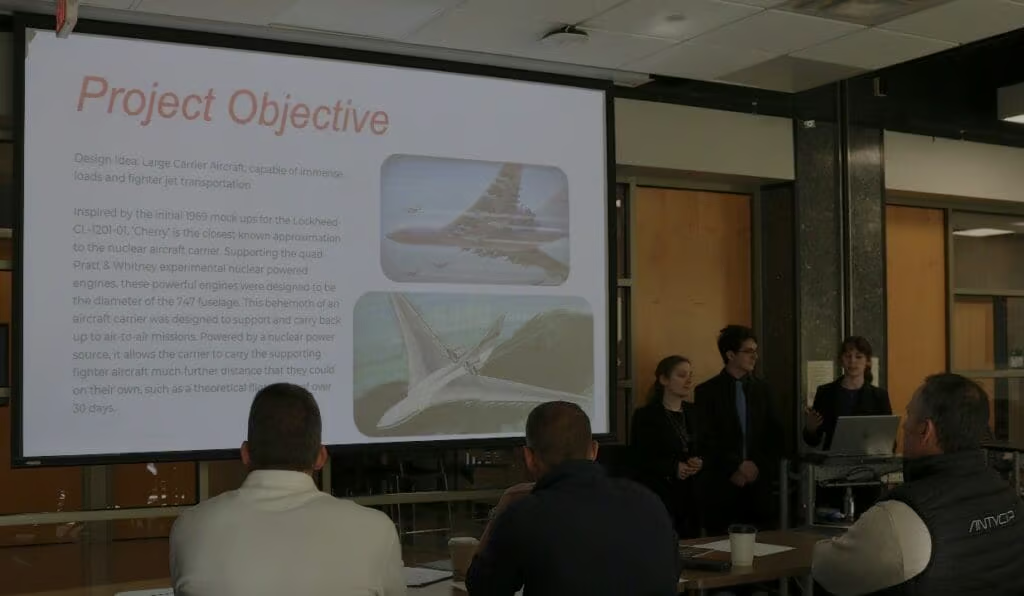
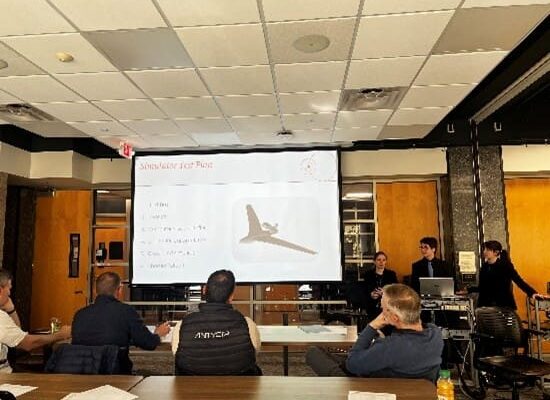
As presentations began, each team outlined its design approach, key engineering decisions, and expected performance, showing a strong balance between conceptual thinking and technical execution.
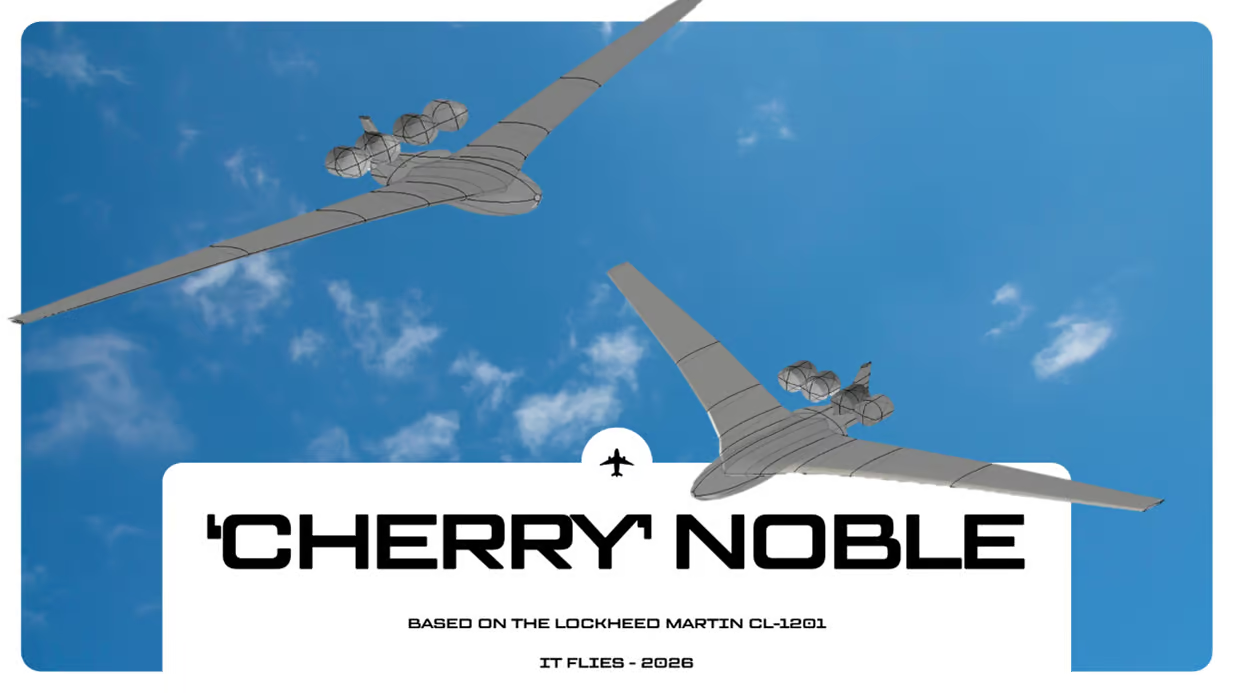
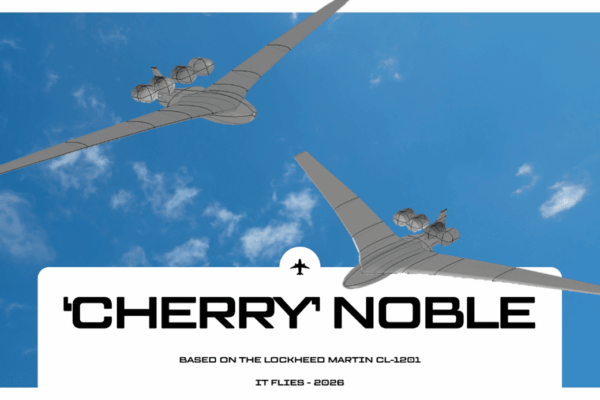
Although the submitted designs were strong overall, Cherry Noble’s design demonstrated the strongest flight performance, alongside an ambitious and highly original concept. Inspired by the Lockheed CL 1201, the design reimagined a large-scale experimental aircraft intended for heavy cargo transport and the airborne deployment of smaller support aircraft.
A striking detail was the concept’s name, drawn from the nuclear reactor at its core, described as its “glowing heart”. In keeping with the scale of the design, the aircraft was conceived around four exceptionally large engines.
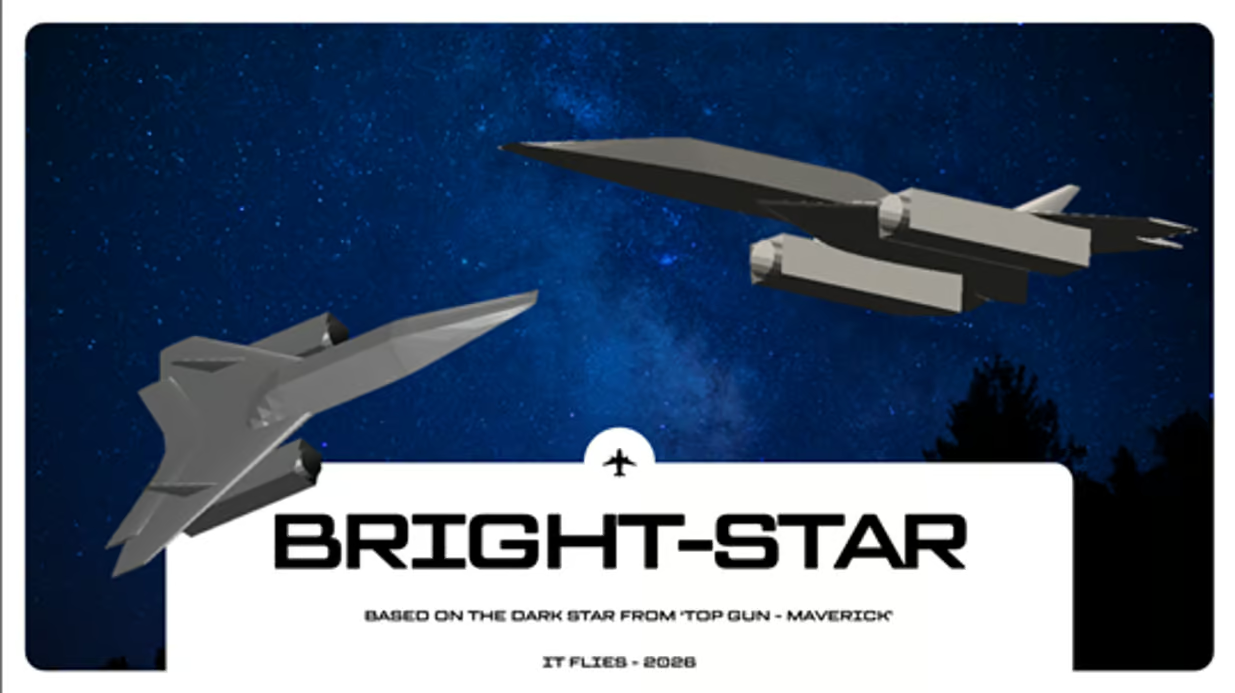
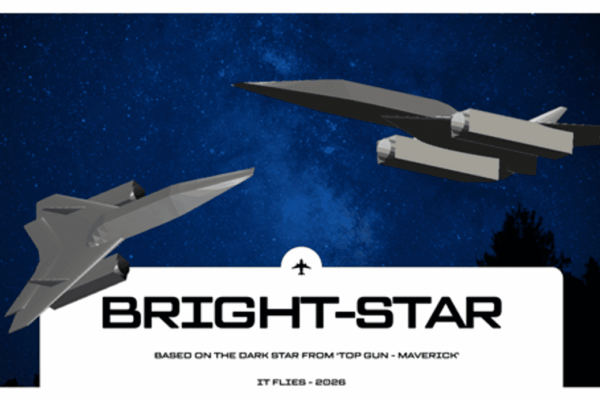
Bright Star explored a high-altitude stealth reconnaissance concept focused on speed, aerodynamic efficiency, and a clearly defined mission profile.
Amir reflected on the diversity of approaches:
“Watching the teams tackle such different problems at the same time is fascinating. You see completely different thought processes, priorities, and problem-solving styles. That is the beauty of IT FLIES, no single right approach.”
From design review to flight evaluation
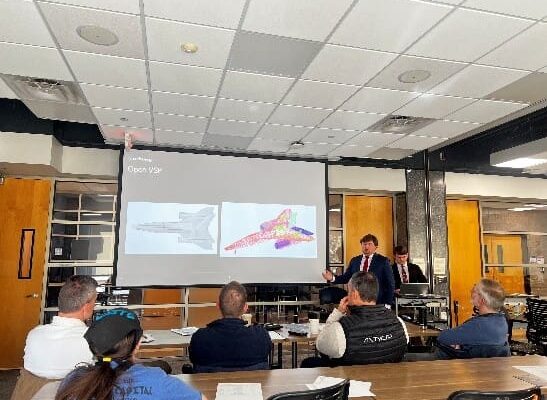
Following the presentations, students defended their designs, explaining the reasoning behind their concepts, the engineering choices they made, and the objectives they set out to achieve.
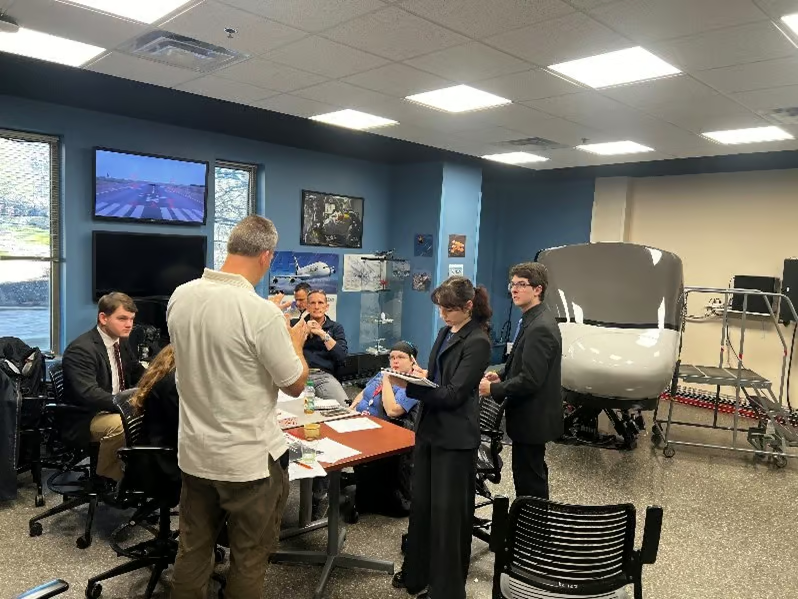
The aircraft then moved onto a synthetic runway environment within the Merlin Flight Simulator. With the design phase complete, the test pilots assessed each concept through representative flight tasks, reviewing handling qualities, stability, and overall mission performance in a fully simulated environment.
Cherry demonstrated smoother, more predictable handling overall, suggesting a concept that prioritised controllability and stable performance under load. Ground handling was notably strong, described as “unexpectedly good considering its size”, while cruise stability remained solid even without pitch trim, with roll and yaw control behaving reliably. Stall behaviour was manageable, although pitch authority was noted as limited during recovery.
Bright Star initially performed well in cruise and was described as “very gentle” and manageable on trim alone, but instabilities emerged across several key phases of flight. During takeoff and the initial climb, control margins appeared more limited, and the aircraft’s behaviour became harder to characterise consistently. In the stall, it exhibited a roll departure that proved difficult to recover from while the final approach was affected by higher speed and difficulty maintaining the intended aim point.
Although the mission profiles differed, each aircraft was evaluated against its own set of criteria. This ensured a fair assessment based on the intended role, performance objectives, and design requirements of each concept.
Redefining success
After the evaluation phase, the test pilots convened to review and score each aircraft. Comparing findings across the different criteria, they reach a final decision together.
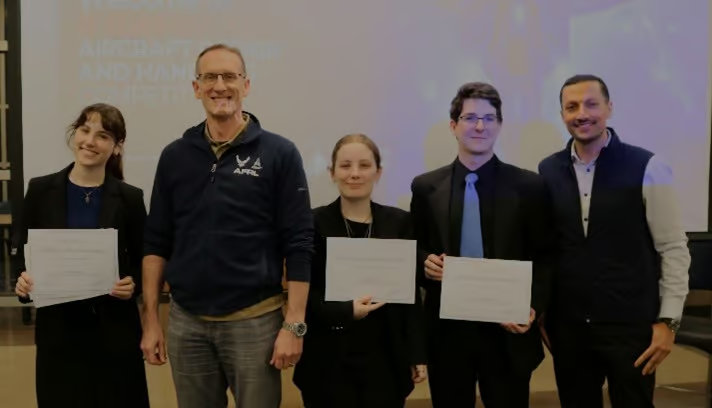
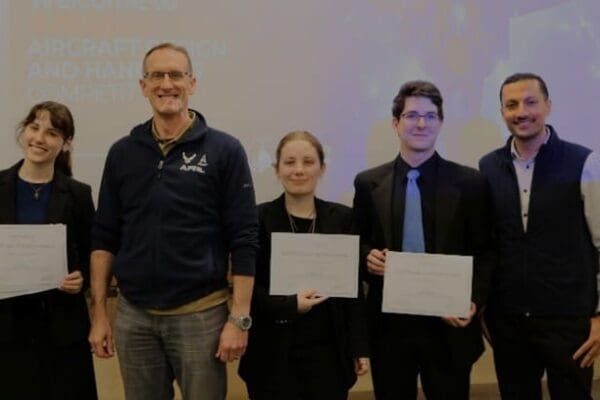
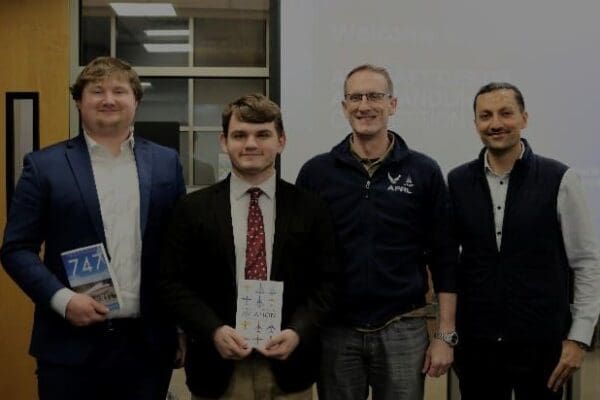
Best Aircraft Design: Cherry Noble
Runner up: Bright Star
Beyond the awards, the real takeaway came through the evaluation process itself. From mission profile considerations to design trade-offs, aircraft behaviour, and stability characteristics, each stage revealed valuable engineering insights. Moments of unexpected performance and handling variation provided lessons that will stay with the students well beyond the competition.
Alongside this, the ongoing dialogue between competitors and test pilots created a strong collaborative environment, giving students valuable perspectives and a positive networking experience throughout the day.
From the test pilot’s perspective, Frank added:
“I look forward to the IT FLIES competition every year for a couple main reasons. First, I love to see the interesting, innovative, and occasionally insane designs the students develop. Assuming we can classify a 4 million kg nuclear-powered airborne aircraft carrier on that spectrum, this year certainly delivered! Second, I thoroughly enjoy interacting with the student-designers. It’s great to see our engineering future secure in very capable and curious hands.”
From the student perspective, Grace Schreyer from the University of Dayton shared:
“The IT Flies USA Competition was an incredibly unique and amazing experience. It was awesome to have our work be tested by real pilots and get in-time feedback! My favourite aspect is the in-depth conversations the students are able to have with the pilots and professors. They provide critical insight into both engineering and professional development skills."
Why it matters
Designing an aircraft is one thing; understanding how it behaves is another. Simulation exposes assumptions, highlights design limitations, and provides practical learning opportunities that lectures alone cannot.
IT FLIES allows students to combine conceptual design, technical analysis, and real-world feedback, giving them experience in a realistic engineering environment that sharpens critical thinking and problem-solving skills.
Ross Uhler, Director at MAK Technologies, commented on the value of the programme:
“IT FLIES is a great opportunity for future engineering students to watch their designs take flight. They receive great feedback on their design from both the sim and the seasoned test pilots flying them.”
Looking ahead:
As simulation technologies continue to advance, IT FLIES will continue to support the next generation of aerospace engineers, offering realistic, high-fidelity testing environments that encourage experimentation, learning, and innovation.
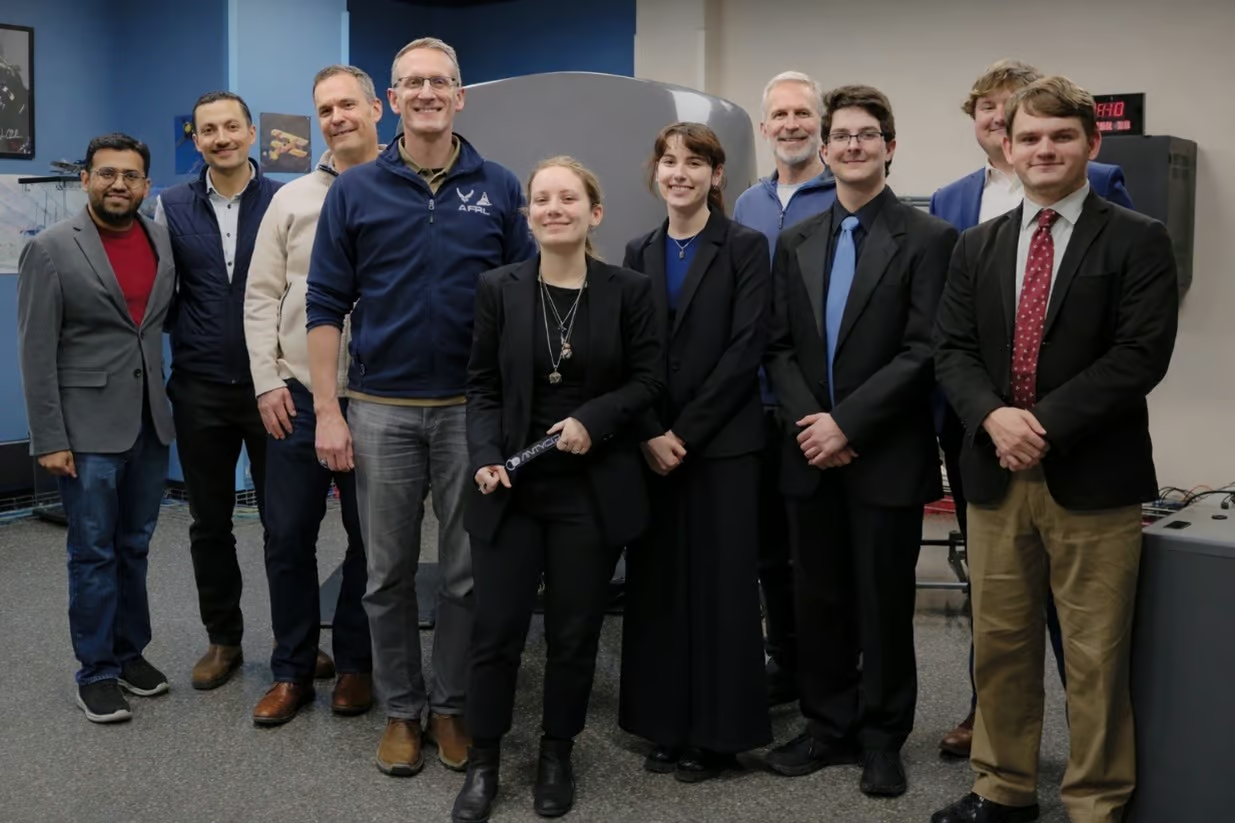
Antycip thanks all participants, judges, test pilots, and the University of Dayton for making IT FLIES USA 2026 a success.
With the momentum building, we now turn our attention to the UK edition of IT FLIES, taking place in Swansea, where participants will take on the challenge, bringing fresh ideas, innovation, and engineering excellence to the next stage of the competition.